
'The government should immediately enact an Act to make caste discrimination a criminal offence and lay down a procedure similar to that of the Anti-Ragging Act.' 'Ragging has nearly been eliminated because it is treated as a criminal offence.' 'Similar procedure should be used in case of caste discrimination.'

If finances are wisely coordinated, it can greatly help in controlling the continuous process of rising prices. To handle your finances during inflation, this is what you should do. . .

India's services sector activity moderated in December as business activity and sales rose at a softer pace, while price pressures and the possibility of new waves of Covid-19 affected business sentiment, a monthly survey said on Wednesday. The seasonally adjusted India Services Business Activity Index fell from 58.1 in November to a three-month low of 55.5 in December. The rates of expansion moderated but were nevertheless "marked" by historical standards, the survey said.

The report suggested that the tariffs can be made simple and transparent.

We should improve the business climate in Mumbai and Delhi, and India's ranking would immediately shoot up, says Bibek Debroy, a full member of NITI Aayog.

RIL's predominantly gas rich KG-D6 block, off the east coast, has also helped boost availability of the environment friendly fuel in the country.

Manufacturing activities in India touched a three-month high in March boosted by faster expansions in new orders and output amid demand resilience and easing of cost pressures, according to a monthly survey. The seasonally adjusted S&P Global India Manufacturing Purchasing Managers' Index (PMI) rose from 55.3 in February to 56.4 in March, signalling the strongest improvement in operating conditions in 2023 so far. The March PMI data pointed to an improvement in overall operating conditions for the 21st straight month.
India ranks 45th in the Legatum Prosperity Index, well ahead of China which is at the 75th position.

A fracture of interstate relations could be India's biggest risk coming out of the pandemic. This topped a list of critical risks for India over the next two years, according to Geneva-based World Economic Forum's Executive Opinion Survey (EOS), whose results were released on Tuesday. Other top risks include a debt crisis in large economies, widespread youth disillusionment, failure of technology governance and digital inequality.

Congress leader Rahul Gandhi said that the underprivileged need economic and political power and not empty words as he again called for removing the 50 per cent ceiling on quota and demanded reservations for Dalits and tribals based on their population.
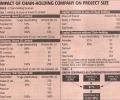
Unless the dividend distribution tax is removed, India Inc's ability to finance investments will be severely compromised.

Economic Survey says Indian carriers operate in an exceptionally high-cost environment.

The Economic Survey today pegged the fiscal deficit for 2010-11 at 4.8 per cent, lower than the Budgetary estimates of 5.5 per cent, on the back of higher realisation from 3G spectrum auction and buoyancy in revenues.

The civil aviation industry, which was hit hard by the global financial meltdown and high fuel cost, saw a strong recovery in 2010 with the domestic passenger traffic rising 19 per cent to 51.53 million, the Economic Survey said on Friday.

The Economic Survey tabled today in the Lok Sabha by the Finance Minister Shri Pranab Mukherjee, says that the whole sale price index (WPI) of food inflation rose to 13.6 per cent in December 2010 on account of unfavourable agricultural supply conditions coupled with the waning of base effects.
The money sent home by Indians from West Asian countries took a beating in 2020-21 due to the pandemic. On the other hand, overseas Indians in advanced nations - the United States, United Kingdom and Singapore - emerged as important sources of remittance, according to a Reserve Bank of India (RBI) survey. Indians working in informal sectors in West Asia seem to have been impacted the most due to the lockdowns and subdued crude oil prices as well as slower pace of migration in recent years.

Two-thirds of organisations in the Indian technology sector are hiring gig workers as they respond to a changing business landscape, said a report by industry organisation NASSCOM and others on Thursday. Focus on requirement for specialised skills, employee demand and cost optimization enabled organisations to use the gig model for technology roles traditionally restricted to HR and support functions. Software development, UI/UX design, and data analytics were the top three gig skills the technology sector needed.

The Indian economy remains on track to regain its position as the world's fastest-growing major economy after official estimates on Friday put the expansion at a tempered 9.2 per cent this fiscal amid concerns over the impact of a resurgent virus on the fragile recovery. The growth in the gross domestic product (GDP) of 9.2 per cent in April 2021 to March 2022 fiscal (FY 2021-22) given by the National Statistical Office (NSO) in its first advance estimate compares with 9.5 per cent expansion forecast by the Reserve Bank of India (RBI) last month. The economy had contracted by 7.3 per cent in the previous financial year.
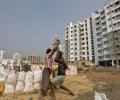
As per a Knight Frank FICCI Naredco report, a majority 69% of the stakeholders say that the residential sales will remain tepid or may even go down further in the coming six months.

India maintained 43rd rank on an annual World Competitiveness Index compiled by the Institute for Management Development (IMD) that examined the impact of COVID-19 on economies around the world this year. The 64-nation list was led by Switzerland, while Sweden has moved up to the second position (from sixth last year), Denmark has lost one place to rank third, the Netherlands has retained its fourth place and Singapore has slipped to the fifth place (from first in 2020). At eighth, Taiwan reached the top-10 for the first time since the ranking began 33 years ago (moving up from 11th last year).
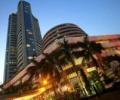
Nifty was up 4.7 per cent in past 4 days.
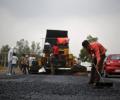
Monetary policy easing in India puts it out of step with the United States, the world's largest economy, where interest rates are expected to rise later this year

The biggest lesson China can teach India is that when it comes to sustaining a love affair with investors, nothing works better than an undervalued currency and its by-product: a current-account surplus.
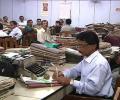
The country is gripped in an unprecedented economic downturn which is certainly going to spill over into the second half of this year unless the infection rate can be brought under control.

An Economic survey released by the state government said the poverty estimates provided by the Planning Commission reveal poverty ratio in the state is 30.7 per cent, 3.2 per cent more than the all-India (27.5 per cent) figure.

India's services sector activities improved further and expanded at strongest rate in over 11 years in May, supported by a substantial pick-up in new business growth, even as input cost inflation climbed to a record high, a monthly survey said on Friday. The seasonally adjusted S&P Global India Services PMI Business Activity Index jumped to 58.9 in May, up from 57.9 in April, amid better underlying demand and strong inflows of new work. For the tenth straight month, the services sector witnessed an expansion in output.

Enthused by reforms and the strong fundamentals, the Economic Survey on Thursday predicted that India would bounce back to a high nine per cent growth in 2011-12 on the way to becoming world's fastest growing economy in four years.

The scarcity of resources is particularly evident in the case of Rajasthan compared to many other states.

The annual Edelman Trust Barometer report, released every year during the World Economic Forum's Davos summit, also showed that business has replaced government as the most trusted and is now followed by government and media in that order.

Average wages paid by listed companies is more than twice the salaries paid by other enterprises, points out Mahesh Vyas.
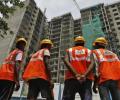
Modi govt must bring about reforms to kick-start big-ticket infra projects.
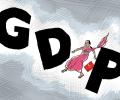
'There are some encouraging signs.' 'Notice that we have not said 7%-plus, we are keeping it at 6% to 6.5%.'

The richest one per cent in India now own more than 40 per cent of the country's total wealth, while the bottom half of the population together share just 3 per cent of wealth, a new study showed on Monday.
'According to the government's Economic Survey, the Indian state's generosity is not restricted to its poorest citizens. In fact, in many cases, the beneficiaries are disproportionately the well-off.'

It is a national economic problem and one that requires a political solution hand in hand with a clear government commitment to stand behind core national assets, says Vinayak Chatterjee.

The large current account deficit and the growing vulnerability on the external front have largely contributed towards the secular decline and the current volatility of the rupee.

The Finance Ministry's Economic Survey had projected a growth rate of 7-7.75 per cent.

Almost all will say no. Then ask them why they don't push back at those who rise the slogan of Khalistan. Somebody would confront you with a counter-question: If people can talk of a Hindu Rashtra, why get so upset if others talk of a Sikh Nation, points out Shekhar Gupta.

The richest one per cent in India now own more than 40 per cent of the country's total wealth, while the bottom half of the population together share just 3 per cent of wealth, a new study showed on Monday. Releasing the India supplement of its annual inequality report on the first day of the World Economic Forum Annual Meeting in Davos, rights group Oxfam International said that taxing India's ten-richest at 5 per cent can fetch entire money to bring children back to school. "A one-off tax on unrealized gains from 2017-2021 on just one billionaire, Gautam Adani, could have raised Rs 1.79 lakh crore, enough to employ more than five million Indian primary school teachers for a year," it added.
 © 2026 Rediff.com - Advertise with us - Disclaimer - Privacy Policy - Sitemap - Feedback - About us - Terms of use - Grievances